Maintaining temperature integrity across unpredictable global transit routes is the ultimate logistical challenge for the pharmaceutical industry. According to World Health Organization (WHO) data, approximately 30% to 40% of vaccines go to waste annually due to severe temperature excursions during distribution. When relying on traditional water-based ice packs or volatile dry ice setups, products face a high risk of localized thermal shock — either over-freezing or premature thawing during runway tarmac delays, customs hold-ups, and erratic tropical seasons.
To solve this problem, pre-validated solutions that are tested using smart computer aided simulations softwares that replicate real world scenarios. Passive Pharma Cold Chain Packaging systems today have evolved to utilize advanced materials such as phase change materials (PCMs) and high performance insulating materials enable absolute thermal autonomy for over 120 hours under extreme ambient environments.
Water-based gel packs are inherently unsuited for high-value biologics, clinical-trial materials, and vaccines. When frozen gel packs are packed out directly alongside a 2°C to 8°C payload, they exhibit a dangerous “sub-zero spike,” dropping internal temperatures below the lower threshold and rendering freeze-sensitive assets completely impotent. Once this initial cold wave dissipates, standard gel packs absorb heat rapidly, losing their protective capabilities within 24 to 48 hours.
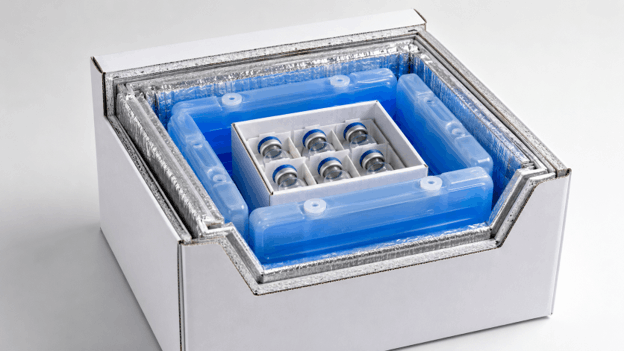
Advanced Pharma Packaging solutions eliminates this problem entirely through latent-heat stabilization. Rather than relying on standard sensible-heat mechanics, these specialized phase change materials are chemically tailored to melt and freeze at exact thermal boundaries (such as +2°C to +8°C, 15°C to 25°C, or sub-zero boundaries from -25°C to -15°C).
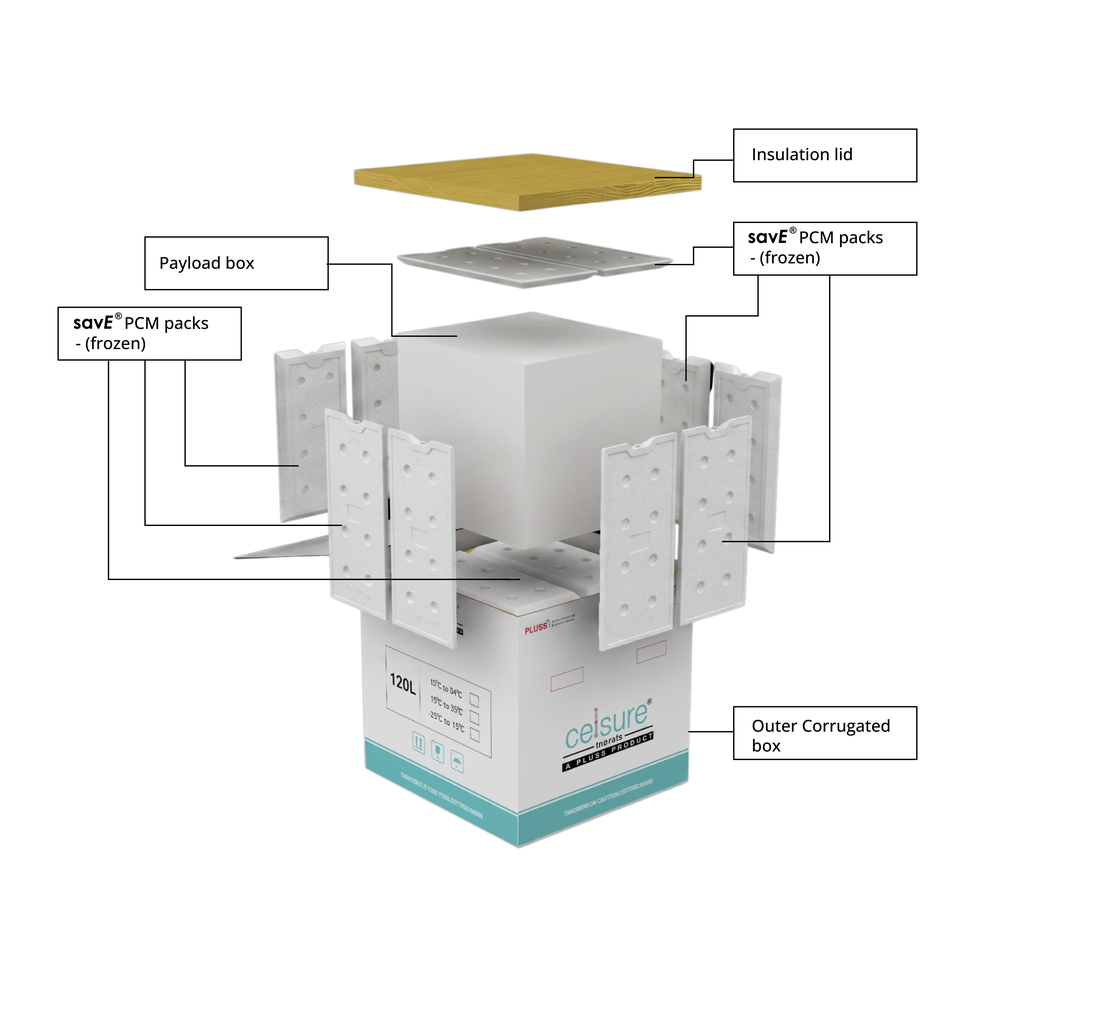
As the external package absorbs ambient tropical heat, the surrounding PCM cassettes begin to transition from solid to liquid. During this phase transformation, the material stores massive amounts of energy while holding a perfectly flat, unchanging temperature profile at its melting threshold. This keeps the internal payload safely protected within its designated window, regardless of fluctuating external conditions.
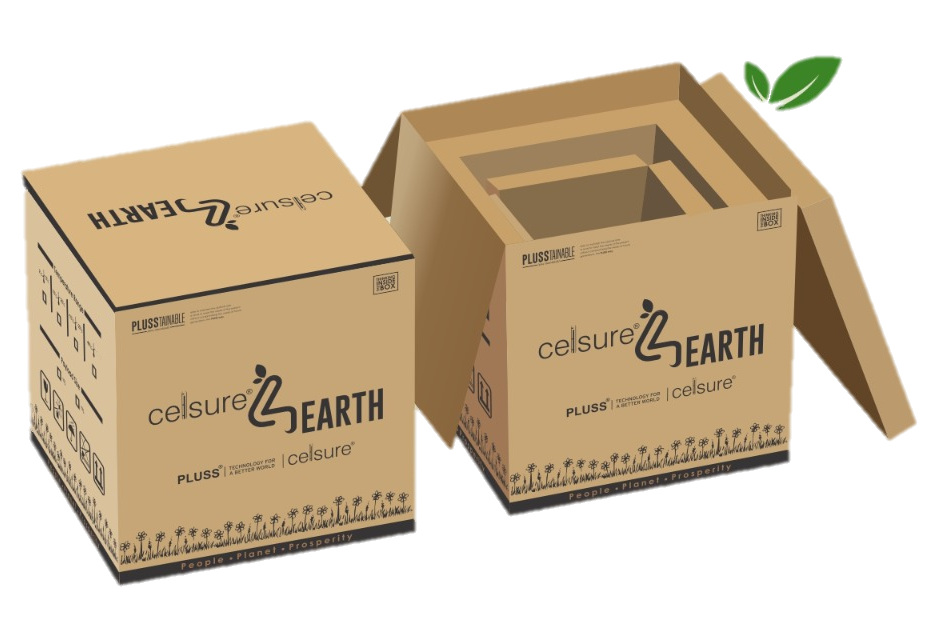
To meet strict global GDP (Good Distribution Practice) and ISTA 7D thermal-profile standards, Pluss Advanced Technologies designs and manufactures the Celsure® line of passive shippers in India. This native manufacturing footprint allows pharmaceutical exporters to optimize their overall logistics budgets by up to 20% compared to expensive imported container-leasing configurations.
The matrix below maps the engineering boundaries, volumetric capacities, and protective durations extracted from official Celsure® Technical Datasheets:
Performance Matrix: Celsure® Pre-Validated Product Specifications
| Model / Configuration Group | Coolant & Insulation Matrix | Validated Temperature Range | Certified Backup Duration | Payload Volumetric Capacity |
|---|---|---|---|---|
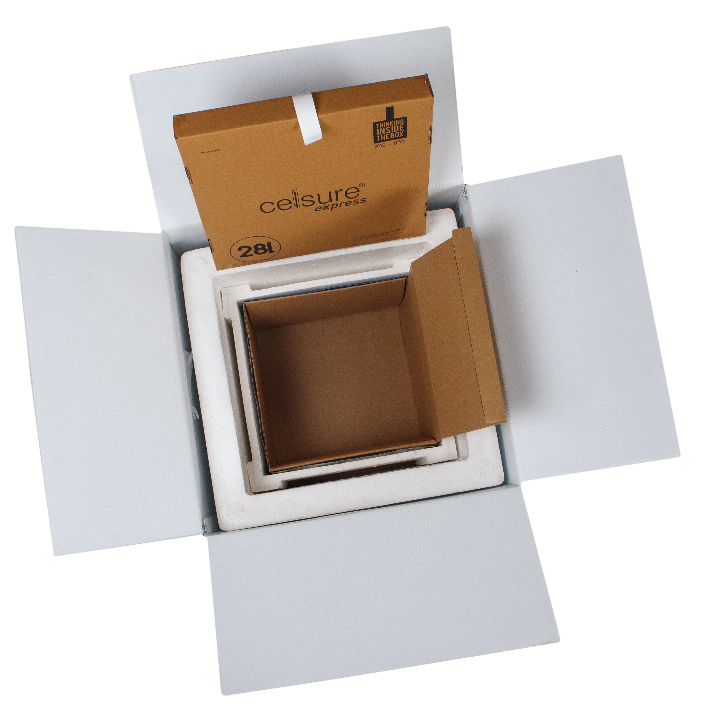
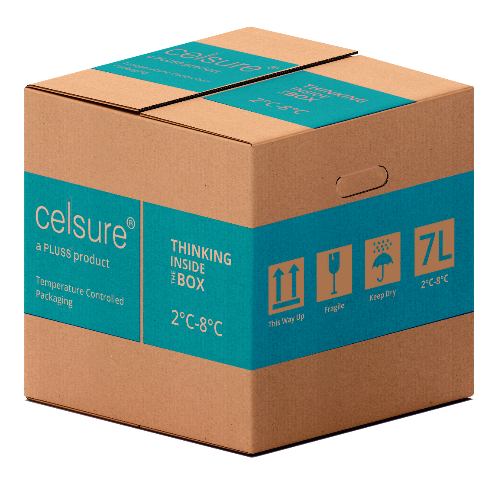
| Celsure® Express Parcel | Gel Pack + savE® PCM | 2°C to 8°C / 15°C to 25°C | Up to 72 Hours | 4 L to 60 L |
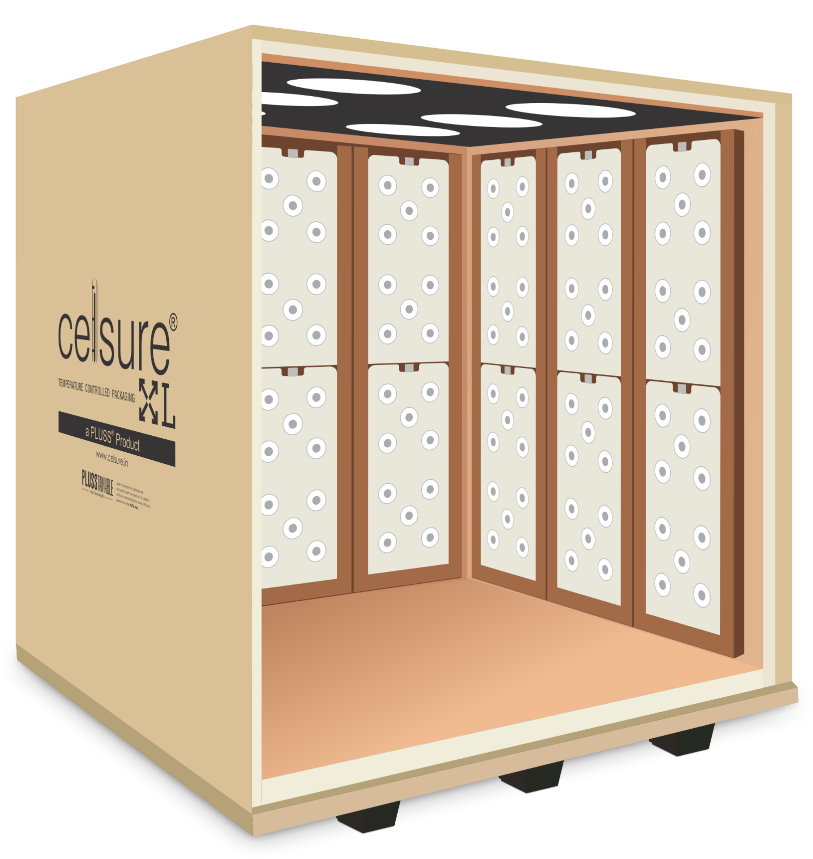
| Celsure® Standard Parcel | All-PCM Matrix | 2°C to 8°C / 15°C to 25°C | Up to 120 Hours | 4 L to 60 L |
| Celsure® Deep Frozen Parcel | All PCM (Model 7L5D-25N) | -25°C to -15°C | 120 Hours + Hibernation | 7 L to 60 L |
| Celsure® Heavy Pallet | Gel Pack + PCM (Model 130L4D-08P) | 2°C to 8°C / 15°C to 25°C | 96 to 120 Hours | 130 L to 370 L |
| Celsure® All-PCM Pallet | All PCM (Model 150L3D-08PS) | 2°C to 8°C | 72 Hours + Hibernation | 150 L to 370 L |
| Celsure® XL Bulk Pallet | Bulk Pallet-in-Pallet + VIP | 2°C to 8°C / -25°C to -15°C | Exceeds 120 Hours | 1,000 L to 3,000 L |
A key challenge in global multi-modal shipping occurs when a temperature-controlled shipper sits stranded in a climate-controlled warehouse or airport holding area waiting for a connecting flight. In a standard insulated container, the internal thermal mass continues to shift and deplete, shortening the overall protection window.
To counteract this vulnerability, the advanced Celsure® all-PCM fleet features a patented Hibernation Feature. When the external ambient environment naturally matches the interior target threshold (e.g., when a 2°C to 8°C box enters a cold-storage warehouse), the structural design stops the phase-change process entirely. It prevents unnecessary thermal energy loss or gain during these periods, locking in the remaining latent-heat capacity.
Once the container is moved back out onto a hot tarmac or into an unconditioned transport truck, the phase change safely resumes. This mechanism provides vital extra hours of thermal stability, allowing shipments to handle unexpected transit delays smoothly.
Why is PCM pharma packaging superior to dry ice for cold chain logistics?
Dry ice sub-cools payloads to extreme temperatures (-78.5°C), which completely destroys freeze-sensitive biological drugs, clinical kits, and standard vaccines. Additionally, dry ice is classified as a hazardous dangerous good by airlines due to carbon-dioxide gas-expansion risks. Pharma Packaging PCM provides a completely non-hazardous alternative that maintains precise, steady temperature windows (such as frozen -25°C to -15°C) without any risk of over-freezing or handling hazards.
What does “pre-validated” mean for temperature-controlled shippers?
Pre-validated means the entire integrated container structure — including the specific outer corrugation layers, structural insulation panels, and exact PCM cassette weights — has undergone rigorous chamber testing against standardized global stress curves (such as the ISTA 7D summer and winter distribution profiles). This ensures the container maintains its target internal temperature window without requiring manual adjustment or real-time configuration by shipping staff.
How do vacuum insulated panels (VIP) complement PCM thermal performance?
Vacuum insulated panels provide an ultra-high thermal-resistance barrier that is up to ten times more efficient than traditional expanded polystyrene (EPS) foam blocks of equal thickness. By coupling VIP technology with high-latent-heat phase change materials, the overall volume and weight of the insulated shipper are dramatically reduced. This delivers a highly favorable payload-to-volumetric-size ratio, significantly lowering air-freight costs.
Don’t let unexpected tarmac delays or summer heat waves compromise your critical pharmaceutical payloads, vaccines, or clinical-trial shipments. Moving from high-risk water gel packs to engineered phase change materials protects product integrity and cuts costly spoilage.
Whether you ship small multi-use clinical-trial parcels or orchestrate bulk-pallet international exports, the PLUSS engineering team can design, simulate, and supply a pre-validated solution tailored to your transit timelines.
→ Explore Celsure® temperature-controlled packaging
→ Talk to our cold chain packaging team about Celsure® PCM shippers



Celsure® Temperature Controlled Packaging
Pluss Advanced Technologies
B-205, Pioneer Urban Square, Sector – 62, Gurugram – 122101, (Haryana), INDIA
+91-124-4309490/91/92
info@pluss.co.in
CIN No:U74899TN1993PLC161495

© 2025. All Rights Reserved.
 ×
×