
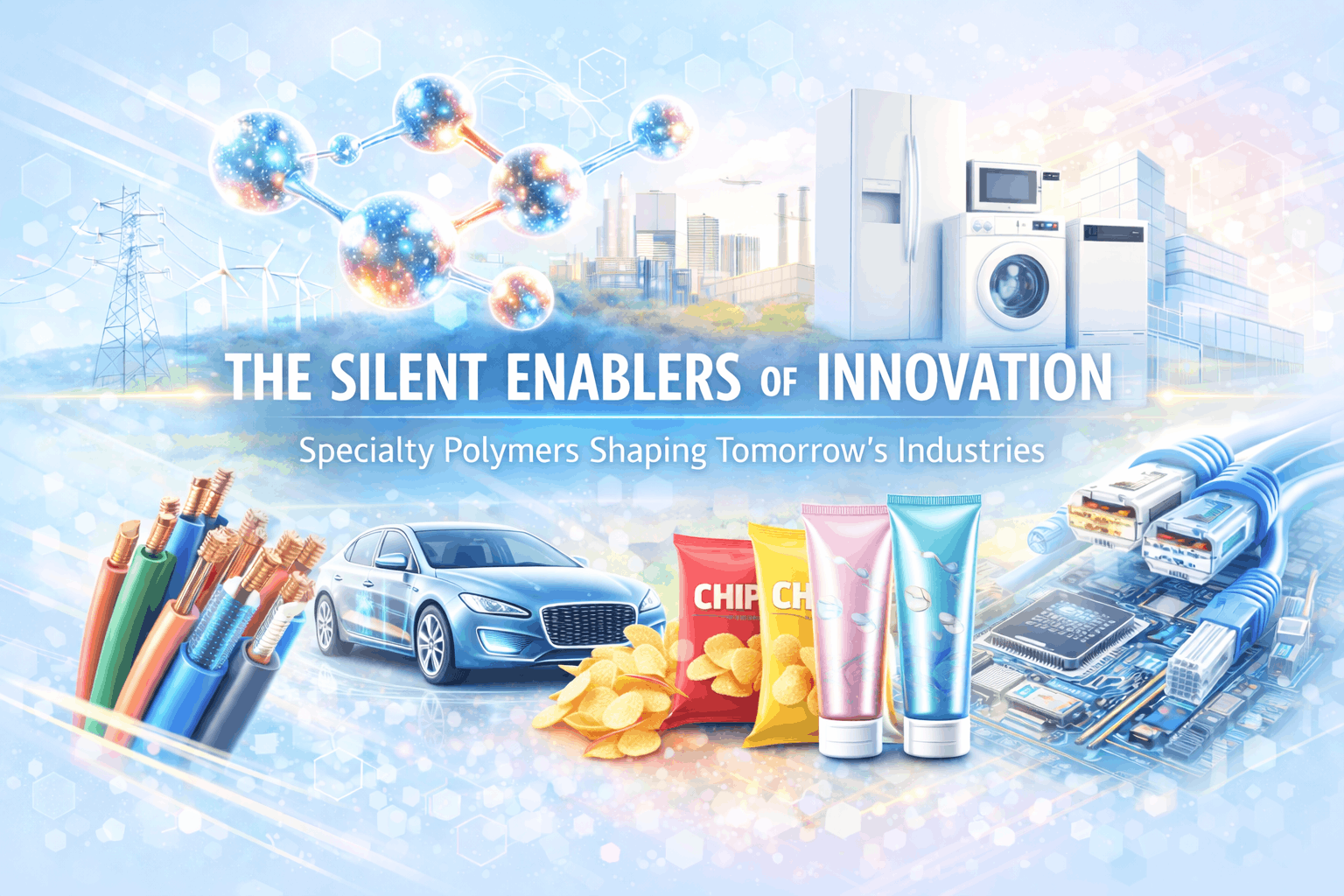
In modern manufacturing, specialty polymers have become indispensable due to their tailored properties that meet specific industry demands. These advanced materials are engineered to enhance performance across various sectors, notably in automotive, packaging, buildings and recycling. By incorporating specialty polymers, manufacturers can achieve objectives such as reducing weight, improving durability and compatibilize the immiscible polymers.
Understanding Specialty Polymers
Specialty polymers are chemically modified polymers designed to enhance general-purpose polymers with specific characteristics. At PLUSS, these polymers are produced by a grafting mechanism through reactive extrusion. Majorly monomers like maleic anhydride and glycidyl methacrylate are used to graft the base polymers. This modification enhances properties such as polarity, adhesion to various substrates, and compatibility with reinforcements and fillers.
PLUSS offers a diverse range of specialty polymers under brands like OPTIM, BindEX, NOVIS, reCoupp, and OPTIPET. These products are utilized in sectors including automotive, wire and cable, wood plastic composites, flexible packaging, white goods, and recycling.
Applications of specialty polymers
1.Enhancing Automotive Functional Components with improved durability and safety
 In the automotive industry, functional components are critical to overall vehicle performance and durability. These components must withstand harsh conditions. Polymers such as PP, nylon and PBT play a pivotal role in these applications. Specialty polymers further enhance their properties through grafting technologies, improving strength and resilience. For example, OPTIM® E-131, a maleic anhydride–modified polyolefin elastomer, acts as an effective impact modifier for polyamides, delivering superior performance even under sub-zero temperature conditions and OPTIM® P-425, a maleic anhydride-modified polypropylene, act as coupling agents for fillers, enhancing the mechanical properties and durability of automotive parts
2.Enabling Performance of Polymers in White Good
 White goods frequently use polymer blends (e.g., PP/PA, ABS/PA, PP/PBT, PC/PBT) to balance cost, strength, and aesthetics. Grafted polymers improve compatibility, adhesion, and toughness in polymers used for white goods. By strengthening interfacial bonding in blends and reinforced materials, they enhance impact resistance, thermal durability, and surface finish. These grafted polymers also improve processability, enabling durable, high-quality appliance components with longer service life and improved manufacturing efficiency.
3.Improving Wires, Cables, and Building Materials Performance with Grafted Polymers
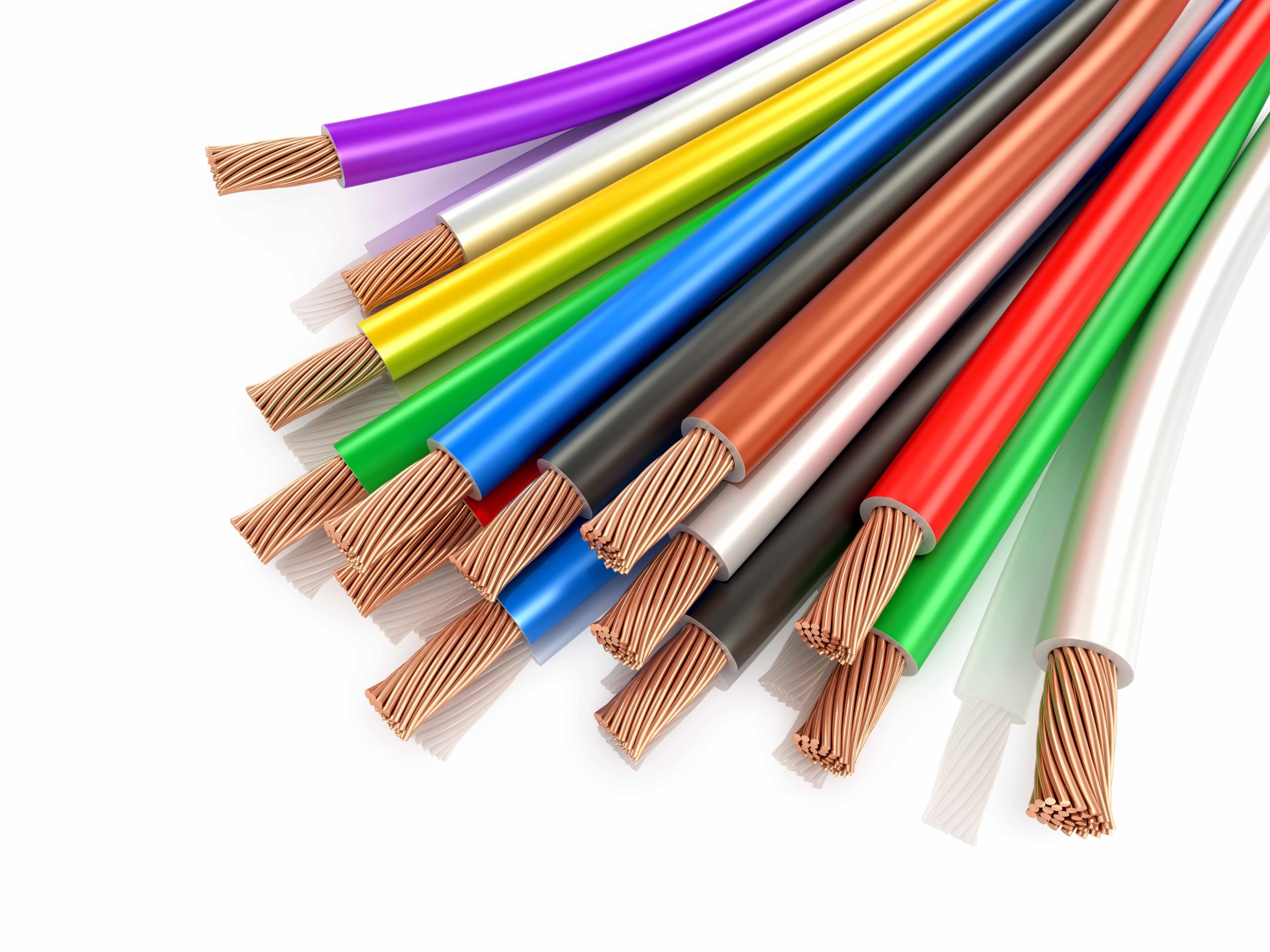 In wire & cable and building material applications, grafted polymers act as effective compatibilizers and adhesion promoters. In cables, they improve bonding between polyolefins, fillers, flame retardants, and conductors, enabling higher filler loading, better mechanical strength, flexibility, and crack resistance without compromising electrical performance. In building materials, including polymer-based alternatives to aluminium composite panels, grafted polymers enhance adhesion with mineral fillers and fibers, delivering lightweight, corrosion-resistant, flame-retardant, and weather-durable composites with improved dimensional stability and long-term service life. OPTIM® E-119, a maleic anhydride-modified polyolefin, acts as coupling agents for fillers, enhancing the mechanical properties and durability of wire and cable.
4.Promoting adhesion in packaging with grafted Polymers
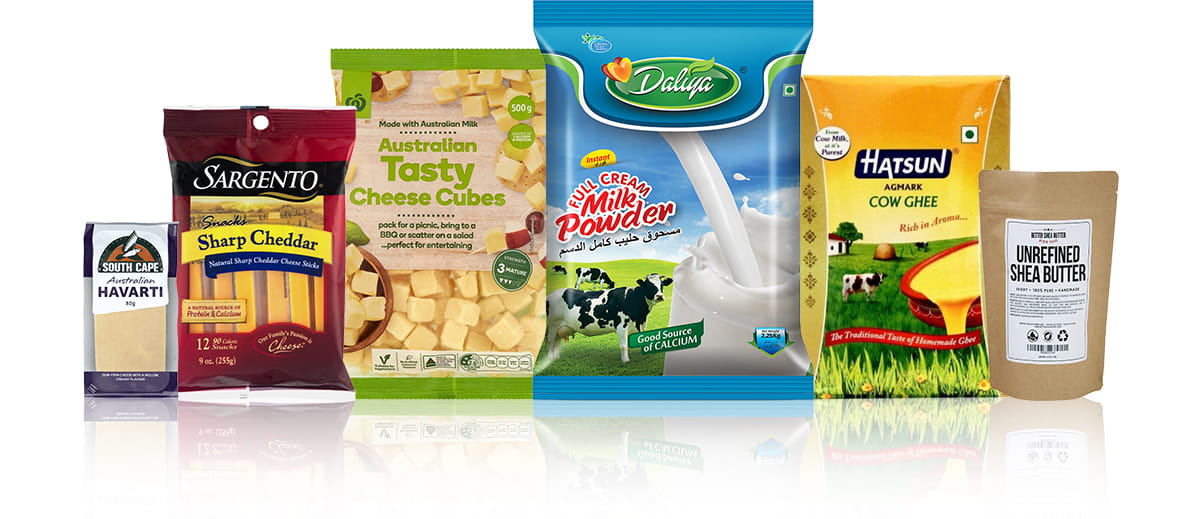 Grafted polymers play a critical role in enhancing the performance of laminated, coextruded, blown and multilayer films in packaging applications. Acting as compatibilizers and tie layers, they improve adhesion between non-polar polyolefins and polar materials such as polyamides and EVOH. This results in strong interlayer bonding, improved mechanical strength, puncture resistance, and reliable seal integrity. Additionally, grafted polymers enhance additive and filler dispersion, improve barrier properties, and ensure stable processing, enabling downgauging while maintaining durability, safety, and high-performance requirements in advanced packaging films.
Specialty polymers are pivotal in advancing manufacturing processes across various industries, particularly automotive, white goods, wires and packaging. Their ability to be customized for specific applications such as enhancing durability, mechanical enhancement—makes them invaluable. As industries continue to evolve, the role of specialty polymers in driving innovation and meeting complex manufacturing demands will only grow.
Contact PLUSS for Advanced Specialty Polymer Solutions
To explore how PLUSS’s specialty polymers can enhance your manufacturing processes, visit pluss.co.in or contact our team for personalized solutions.